Barbershop to Brow Bar: 7 Myths of Growing Salon Revenue 2026
Discover the gritty reality of adding premium lash and brow services to a traditional barbershop. We bust the top 7 myths about staff, pricing, and retention in 2026.
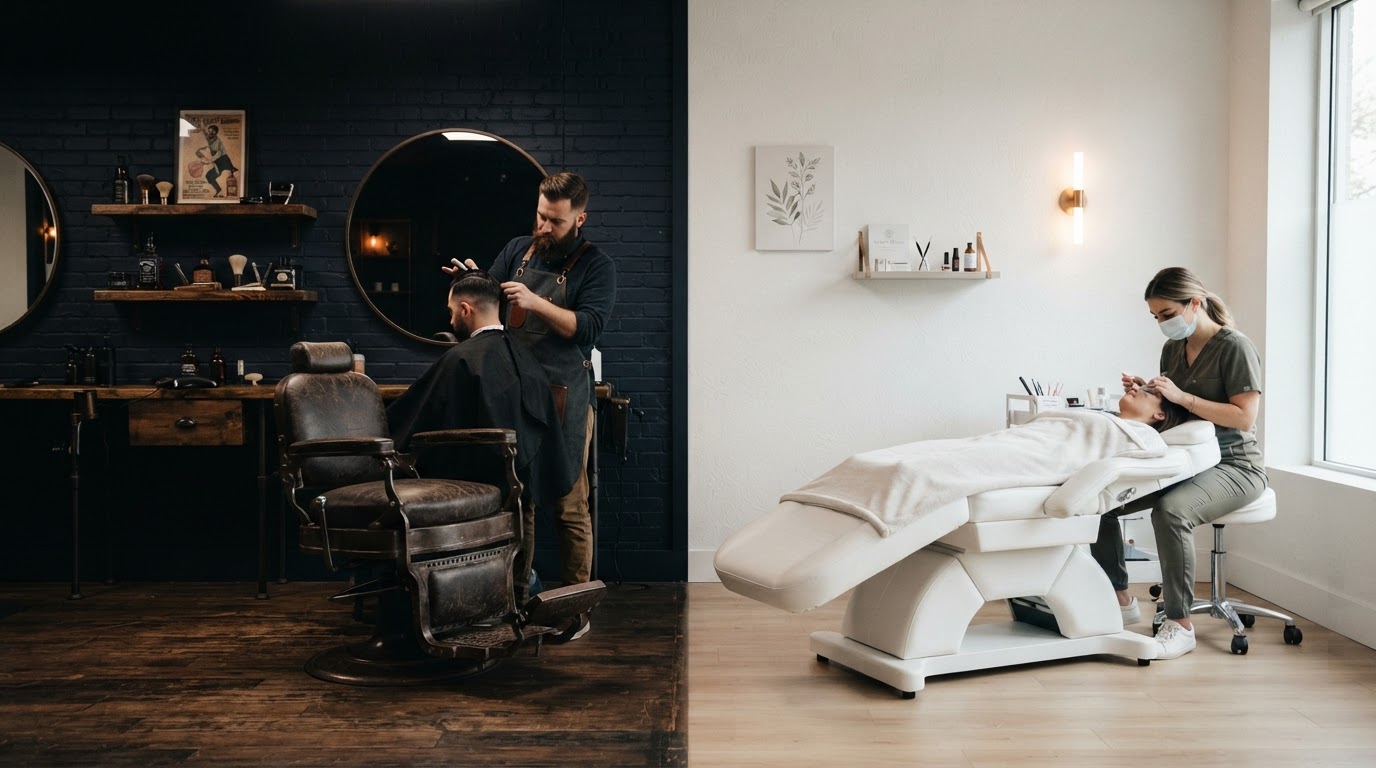
Imagine a bustling barbershop on a Saturday morning in 2026. The clippers are buzzing, the hot towels are steaming, and the banter is loud. Now imagine, tucked in a quiet, stylish corner of that same shop, a dedicated lash and brow artist working meticulous magic on a client. Sounds like a clash of worlds? That’s what I thought when I, a third-generation barber, decided to introduce lash extensions and brow lamination to our traditional men's grooming space. We wanted to grow revenue without just hiking up haircut prices. The transition was rocky, hilarious, and ultimately incredibly profitable. But along the way, I had to unlearn almost everything I thought I knew about the beauty business.
When you run a barbershop, you think in terms of volume: get them in the chair, give them a sharp fade, and get them out in thirty minutes. Lash and brow services operate on a completely different frequency. They require precision, time, and a serene environment. Bridging this gap taught me profound lessons about client retention, pricing strategy, and staff management that apply to any salon looking to diversify.
The Reality of Cross-Selling in 2026
When we first built our "Lash & Brow Loft" (a soundproofed glass enclosure in the back), the barbers laughed. "Who’s going to get their brows done while someone is getting a zero fade?" they asked. The answer surprised us all. The partners, wives, and friends who used to wait in the car were suddenly booking appointments. Even better, our existing male clients started asking about "brow tidying" and subtle tints.
But navigating this new revenue stream meant busting some deeply ingrained industry myths. Here are the most persistent myths about adding lash and brow services, and the reality I discovered the hard way.
Myths vs Reality: Lash & Brow Expansion
Myth 1: Your existing barbershop clients won't buy lash and brow services.
The reality is that convenience is the ultimate luxury in 2026. While your core male clientele might not be booking volume lash extensions, their partners absolutely will if the environment is welcoming. Furthermore, male grooming is expanding rapidly; brow mapping and tinting are becoming standard requests for groomsmen parties and professionals. You aren't just selling to the man in the chair; you are selling to their entire household.
Myth 2: You can manage lash artists exactly like barbers.
Barbers thrive in a fast-paced, high-energy environment, often working on a commission structure that rewards speed. Lash artists, however, perform tedious, eye-straining work that requires breaks between long sessions. If you manage a lash tech like a barber, they will burn out in a month. You must adjust your staff management style, offering longer block times and ergonomic support.
Myth 3: Pricing lash extensions should follow the same formula as haircuts.
A haircut takes 30-45 minutes; a full set of volume lashes can take up to three hours. If you try to price lashes based on your barbershop's hourly chair rate, you will underprice the service and lose money on product costs. Lash pricing must account for expensive adhesives, premium synthetic mink, and the intense physical toll on the artist. You must calculate pricing based on material costs plus a premium hourly rate, usually resulting in a much higher ticket price than a haircut.
Myth 4: Client retention strategies are the same across all services.
In a barbershop, retention is often driven by loyalty to the shop's vibe and the barber's banter. With lash extensions, retention is driven purely by the quality of the retention (how long the lashes last) and aftercare education. If you don't implement a strict lash fill schedule (every 2-3 weeks) and sell specialized lash cleansers, you will lose clients. Retention in the lash world is highly systematic, not just social.
Myth 5: You don't need specialized marketing; your current foot traffic is enough.
Foot traffic is great for walk-in fades, but nobody walks in for a two-hour lash extension appointment on a whim. Lash clients do extensive research, look at before-and-after portfolios on social media, and read reviews about hygiene practices. You have to run targeted digital campaigns specifically highlighting your lash and brow expertise, completely separate from your barbershop branding.
Myth 6: Adding services automatically means higher profit margins.
Revenue is not profit. Adding lash and brow services requires significant upfront investment in specialized lighting, ergonomic beds, ventilation for adhesives, and high-end backbar supplies. While the gross revenue might jump, the net profit margin might actually shrink initially until you build a solid book of recurring lash fill appointments. You have to budget for the slow ramp-up period.
Myth 7: Any esthetician can do high-quality lash extensions.
Many barbershop owners assume they can just hire a newly licensed esthetician and have them do everything from facials to brow lamination to mega-volume lashes. The reality is that advanced lash artistry is a highly specialized niche. Hiring a generalist often leads to subpar lash work, which can damage natural lashes and ruin your shop's reputation. You need to hire a dedicated, certified lash technician and pay them what they are worth.
Staff Management: Bridging the Divide
The biggest hurdle wasn't the clients; it was the staff. Our barbers were used to loud music and constant chatter. Our new lash artist, Sarah, needed focused quiet. We had to create a physical and cultural divide that still felt like one cohesive business.
"The secret to a multi-service salon is not forcing everyone to work the same way, but respecting the different rhythms required for different crafts."
We implemented cross-training not on how to perform the services, but on how to talk about them. We taught the barbers how to identify a client whose partner might appreciate a gift card for a brow lamination. We taught Sarah how to explain the benefits of a hot towel shave to her clients' significant others.
We also had to rethink our compensation structure. Barbers were on a traditional sliding scale commission. Because lash product costs are so much higher (premium adhesives, quality trays of extensions, specialized tweezers), we moved Sarah to a base hourly rate plus a performance bonus based on client retention and retail sales (lash serums, cleansers). This ensured she didn't feel pressured to rush through a meticulous service just to make rent.
Pricing Strategy for the Mixed Salon
When you add a premium service like lash extensions to a traditional barbershop, pricing can be jarring. A standard haircut might be $40, while a full set of hybrid lashes is $180.
We had to educate our clients on why the pricing was different. We broke down the time investment. A 3-hour lash appointment occupies the same time as six haircuts. If we didn't charge appropriately, the service space wouldn't be profitable.
We also introduced tiered pricing for our brow services to make them more accessible as an add-on.
- Basic Brow Grooming (Thread/Wax): $25 (Easy add-on for existing barbershop clients).
- Brow Tint & Shape: $45 (Popular for both male and female clients looking for more definition).
- Signature Brow Lamination: $85 (A premium service requiring more time and chemical processing).
This tiered approach allowed our existing clientele to dip their toes into the new services without sticker shock, while still attracting high-ticket clients for specialized treatments.
Client Retention in a Diverse Ecosystem
Retention is the lifeblood of any salon business in 2026. But the mechanisms for keeping a haircut client versus a lash client are vastly different.
For barbershop clients, we rely on the pre-book. "See you in four weeks, mate."
For lash clients, it requires a structured loyalty and maintenance program. Lash extensions shed naturally with the client's hair growth cycle. If a client waits four weeks for a fill, they basically need a new full set. We had to implement strict policies: a 2-week fill, a 3-week fill, and anything beyond 4 weeks is charged as a full set.
To manage this, we used automated SMS reminders specifically tailored to the service type. A barber client gets a casual text: "Time for a trim!" A lash client gets an educational text: "Your lashes are shedding! Book your 3-week fill now to avoid paying for a full set, and don't forget to wash them daily!"
This level of detailed communication is difficult to manage manually, especially when you are juggling two completely different types of clientele in one building.
FAQ
How do I market female-focused lash services in a traditionally male barbershop?
You need to segment your marketing. Create a distinct sub-brand or dedicated social media page for your lash and brow loft. Use targeted local ads aimed at demographics interested in beauty and aesthetics, rather than relying solely on your existing barbershop audience. Ensure the physical space for the lash services looks and feels distinctly premium and separate from the barber floor.
Should I hire a lash artist on commission or booth rent?
For a barbershop transitioning into mixed services, an employment model (hourly plus commission/bonus) is usually safer initially. It allows you to maintain strict control over the customer experience, pricing, and branding while you test the waters. Booth renters run their own independent businesses, which can lead to a disjointed client experience if their vibe doesn't match your shop's culture.
How do I handle the noise of a barbershop interfering with relaxing lash appointments?
Physical separation is non-negotiable. You must invest in a dedicated, enclosed room for lash and brow services. Use sound-dampening materials like acoustic panels, solid core doors, and a separate sound system playing relaxing ambient noise in the lash room to mask the buzzing clippers and loud conversations from the barber floor.
Navigating the Future of Mixed Salons
The days of the strictly singular-focus salon are fading. In 2026, clients want comprehensive grooming hubs. They want to get their skin, hair, and lashes addressed under one roof, provided the quality remains exceptionally high across all departments.
Transitioning our barbershop to include a specialized lash and brow studio was the hardest business decision I’ve ever made, but also the most lucrative. It required completely throwing out my old playbook regarding staff management, pricing strategy, and client retention. I had to accept that what works for a 30-minute fade will fail spectacularly for a 3-hour volume lash set.
By respecting the unique demands of esthetics, investing in proper physical infrastructure, and building specialized retention models, we created a hybrid space that thrives. It turns out, the contrast between the loud, energetic barber floor and the quiet, meticulous lash loft isn't a clash; it's a perfectly balanced ecosystem. Managing the complex booking rules for these vastly different services is where having a smart system like Imma da AI receptionist truly saves you from administrative chaos.
Try Imma da AI receptionist free
Stop missing bookings. Let AI handle inquiries 24/7.