Why Your Balayage Salon Revenue Strategy is Broken (A Nail Tech's Opinion)
Discover why the traditional balayage revenue model is failing in 2026, and learn how a solo nail tech's approach to pricing and retention can save your salon.
Picture this: You are staring at the clock. It is 1:45 PM on a fully booked Saturday. Your 10:00 AM balayage client is still sitting in your chair with a head full of foils, processing at a glacial pace. Meanwhile, your 2:00 PM appointment is already texting you from the parking lot, saying she will be there in five minutes. Your salon assistant has vanished to take a break, and you haven't even had time to take a sip of water, let alone eat lunch. Your anxiety is skyrocketing, and you are left wondering if this massive, half-day hair color project was actually worth the stress. If this 60-second scenario makes your chest tight, you are entirely normal.
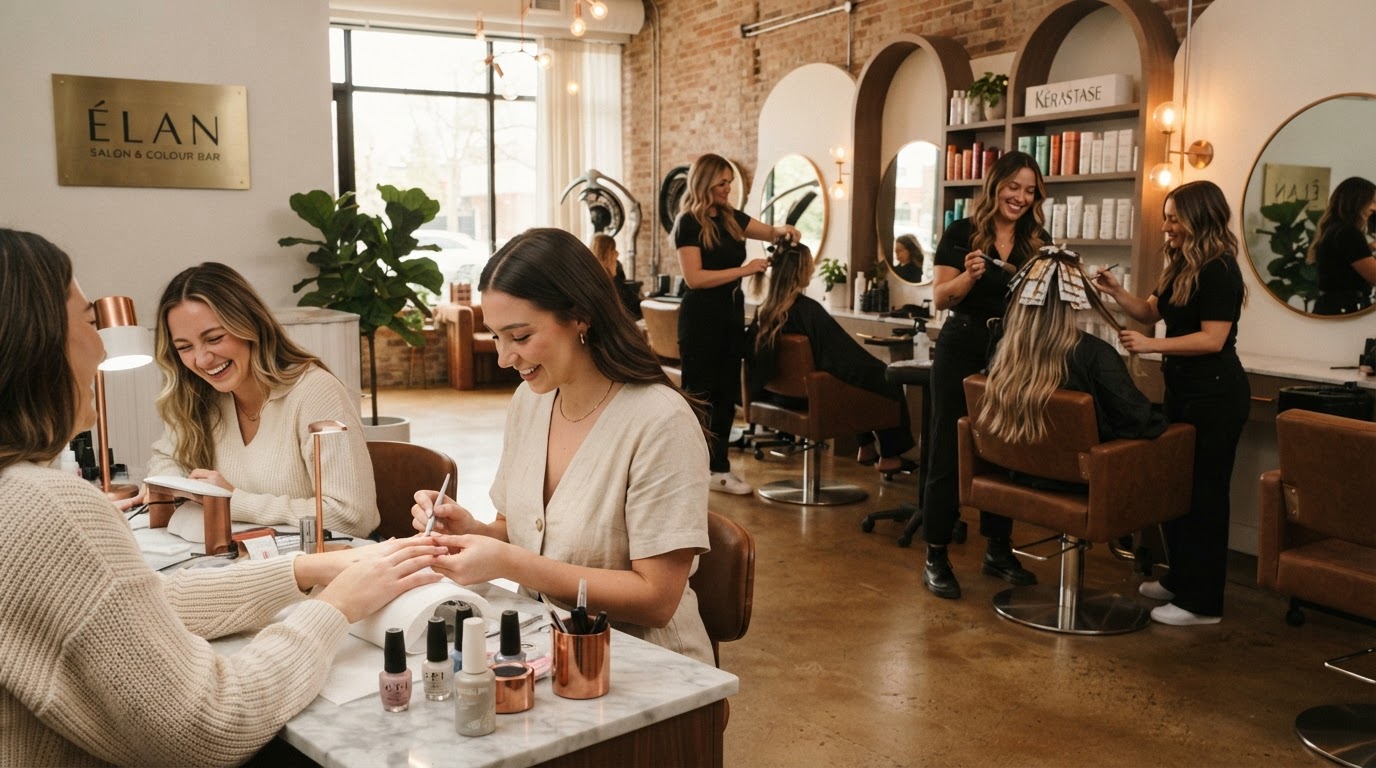
As a solo nail technician who has rented a booth inside a sprawling, high-end hair color studio for the last three years, I have watched this exact tragedy unfold hundreds of times. I sit at my table, meticulously painting French tips and curing gel polish, quietly observing brilliant balayage specialists burn themselves out for a single, massive payout. Today, I am going to share an unpopular opinion: the traditional balayage salon revenue strategy in 2026 is fundamentally broken. My thesis is simple: hair professionals rely entirely too much on rare, massive-ticket appointments, completely neglecting the frequent, predictable client retention strategies that make nail studios reliably profitable. If hair colorists do not overhaul their pricing strategy, staff management, and retention models to act a little more like nail techs, they will face a devastating wave of burnout.
The Problem with the "Big Ticket" Balayage Salon Revenue Strategy
Let us be brutally honest about the numbers. Many colorists take immense pride in charging $400 for a transformative balayage session. On paper, booking two of those a day sounds like an incredible salon revenue strategy. But when that single service takes five hours, burns through bowls of expensive lightener, and ties up your assistant for an hour and a half, your actual profit margin shrinks dramatically.
The Math Simply Doesn't Add Up
The main counterargument I hear from my hair-stylist colleagues is: "But nail services only bring in $75 an hour, whereas my balayage is high-end art." That might be true, but as a nail tech, my schedule is airtight. I see my clients every three weeks, without fail. My income is as predictable as a metronome. A balayage client, by the very nature of the technique, is designed to have a "lived-in" look, meaning they might only return to the salon every five or six months.
If your entire balayage salon revenue strategy relies on a client showing up twice a year for a massive financial hit, you are not running a scalable business; you are gambling. If two of those $400 clients cancel in November due to sickness, you suddenly have a catastrophic hole in your monthly projections.
| Metric | Solo Nail Tech Approach | Traditional Balayage Approach |
|---|---|---|
| Average Ticket Price | $75 | $350 |
| Service Duration | 1 Hour | 4-5 Hours |
| Visit Frequency | Every 3-4 Weeks | Every 16-24 Weeks |
| Annual Revenue per Client | ~$975 | ~$875 |
| Risk of Cancellation | Low Impact (Easy to fill) | High Impact (Half day lost) |
As the comparison shows, the "cheaper" service often yields higher annual revenue per client, simply because of consistent client retention and volume.
Why Staff Management Fails When Every Service Takes Four Hours
Another glaring flaw in the current hair color business model is staff management. In a salon focused heavily on complex balayage and color corrections, the staff is either severely overworked or completely idle.
The Assistant Bottleneck
Hair stylists performing these long services lean heavily on their assistants. They need someone to mix the gloss, wash out the foils, and perform the blow-dry. But if you want a robust balayage salon revenue strategy, you must track exactly how much that assistant is costing you during downtime. All too often, I see salon assistants standing around scrolling on their phones while a client processes for 45 minutes, only to be overwhelmed when three clients need to be washed at the exact same time.
A stronger approach involves mastering the art of double-booking, or staggering appointments. Many modern colorists aggressively argue against double-booking, claiming it ruins the "luxury client experience." I strongly disagree. If you manage your time perfectly, you can easily perform a 45-minute haircut on client B while client A is processing in foils. Efficient time usage is not a betrayal of luxury; it is the cornerstone of profit.
Redefining Retention Through "Micro-Touch" Services
The most critical part of my argument comes down to client retention. Balayage is famously marketed as a low-maintenance color option. Stylists tell their clients, "You won't need to see me for six months!" That is a terrible way to run a business.
Stealing the Nail Tech Hustle
To fix your balayage salon revenue strategy, you need to implement "Micro-Touch" services. You must borrow the nail tech mentality of constant, scheduled maintenance. While they might not need a full head of hand-painted highlights for half a year, their hair will absolutely get brassy, and their face-framing pieces will grow out.
Instead of waving goodbye for six months, mandate a 6-to-8-week maintenance appointment before they leave your chair. Book them for a $95 gloss, a treatment, and a quick trim. These appointments take less than an hour, require minimal product, and keep the client emotionally attached to your salon. This frequent touchpoint is exactly how nail technicians achieve 85% retention rates, and hair colorists need to adopt it immediately.
Pricing Strategy: Charging for Time, Not Just Bowls of Lightener
Let us talk about your pricing strategy. The biggest mistake I see balayage experts make is relying on complicated à la carte menus. They charge a base rate, add $40 for a root smudge, $35 for an Olaplex treatment, and $20 for every extra bowl of bleach. By the end of the appointment, the stylist is doing mental gymnastics, and the client feels nickel-and-dimed.
The Shift to Hourly Pricing
As a solo nail technician, I am essentially selling my time. If a client wants elaborate 3D nail art that takes an extra hour, I charge for that hour. The hair industry needs to fully embrace hourly or time-block pricing in 2026.
If a client with waist-length, thick hair wants a dimensional balayage, it is going to take substantially longer than a client with fine, shoulder-length hair. If you charge a flat hourly rate (for example, $100 to $150 per hour), you are completely protected against unexpected color corrections, extra product usage, and clients who have significantly more hair than average. If they are in your chair for four hours, the bill is $400. This transparent pricing strategy builds trust and guarantees that your salon revenue strategy actually aligns with the physical labor you are putting in.
FAQ
How do I transition my existing clients to hourly pricing without losing them?
You must over-communicate. Send out a detailed email explaining that the new pricing structure is actually simpler and more transparent. Explain that there will be no more hidden fees for "extra bowls of color" or toners, and that they are simply paying for your dedicated time and expertise.
How do I convince a balayage client to come back for a "Micro-Touch" appointment?
Frame it as insurance for their investment. Tell them, "You just spent $350 on beautiful color. To keep it from turning brassy and dull, I need to see you in 6 weeks for a quick 45-minute gloss." Pre-book it before they leave the salon.
Is double-booking really feasible without stressing out the staff?
Yes, but it requires flawless scheduling software and strict timing. You cannot double-book two complex chemical services. You stagger a long processing time (like a full balayage) with a quick, predictable service (like a men's haircut or a gloss).
A New Era of Profitability
In conclusion, watching the chaos of a high-volume color studio from my quiet nail desk has made one thing perfectly clear: working harder on massive, exhausting appointments is not the key to wealth. A truly successful balayage salon revenue strategy requires a shift in mindset. You must stop idolizing the grueling five-hour transformation and start embracing the consistency of time-based pricing, intelligent staff utilization, and rigorous, mandatory maintenance appointments. By adopting the relentless consistency of a solo nail technician, colorists can finally achieve predictable income and reclaim their sanity. And if you find that managing all these frequent, micro-touch appointments is overwhelming your front desk, a smart tool like Imma da AI receptionist can effortlessly handle the booking traffic, leaving you to focus on the art.
Try Imma da AI receptionist free
Stop missing bookings. Let AI handle inquiries 24/7.